
Continuing from Hardware and Bluetooth Control.
Assembly
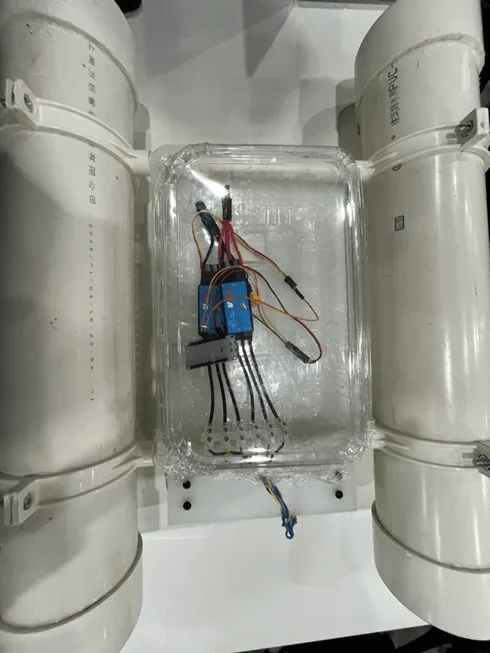
Couldn’t find a suitable waterproof box, so temporarily used a plastic box sealed with plastic wrap; a board was fixed on the hull to mount the propellers.
Launch Test
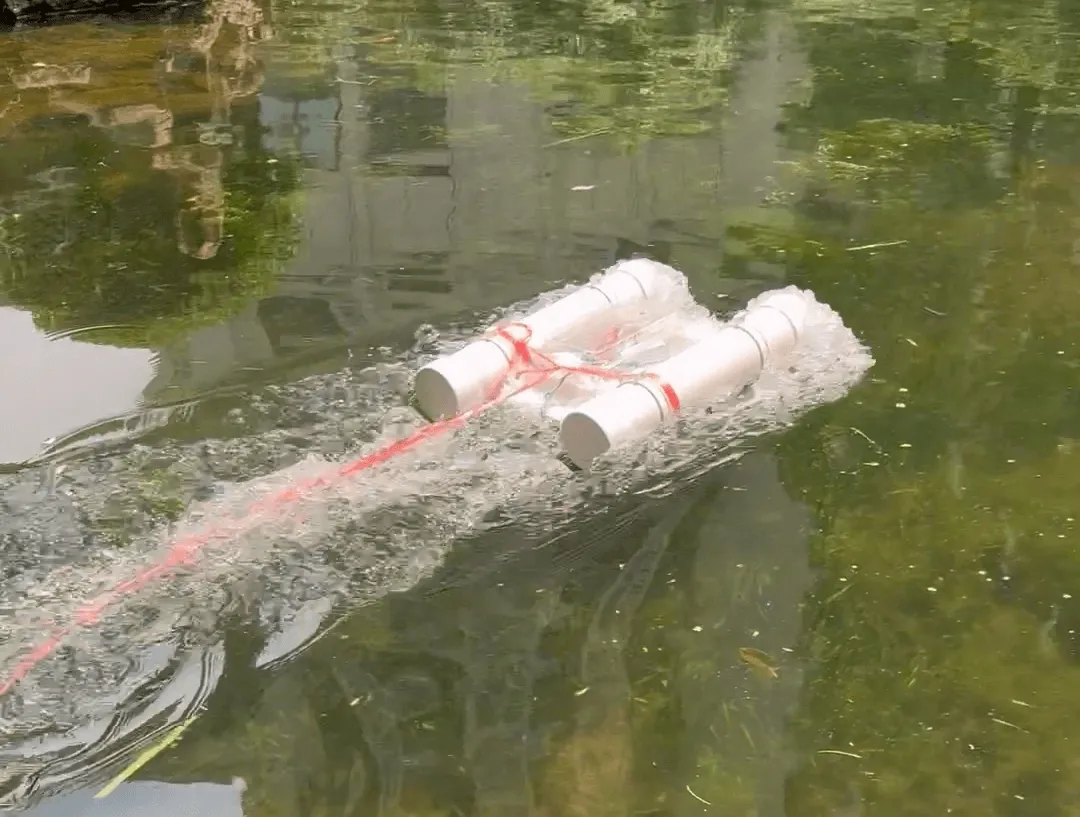
It ran normally (tied a rope to it just to be safe). However, it also revealed a few issues:
- The combination of a plastic box and plastic wrap is not completely waterproof; it leaked quite seriously, especially at maximum speed
- The hull’s draft was relatively deep, which was also one of the reasons for the water intake
- The bow resistance was too high
- Rapidly sending multiple Bluetooth speed changes causes latency accumulation and blocks communication (so Bluetooth is actually not quite suitable for this scenario)
In response to this, the following solutions were proposed:
- Replace the waterproof box
- Add conical structures to the bow
- Continue implementing Wi-Fi control
Brief Collaboration
During the development, octpus-01 proposed to collaborate with us on developing the Wi-Fi control feature and sharing the same control application later.
Hi Lin,
We are very happy to reach a collaboration. We will modify the code and push it to your branch. We greatly appreciate your open-source spirit and hope to meet you in more events!
Here is the link to our project: https://github.com/octpus-01/cyez-innovation_for_future-2711wt.
See you!
Hi Lin,
I actually realized here that we don’t really need Flutter as the development framework.
According to the
dev_v2branch I just pushed on GitHub, I think we can use a computer to achieve Wi-Fi transmission control, which is relatively simpler and easier to handle.Of course, this is more in line with my development in Python plus a little bit of C++.
This should be a magical solution.
My parents just banned my WeChat, but email communication is always open.
Next step: Wi-Fi Control and Optimization.